Turin Olympics
Event Identity & Pictogram System
Tools: Adobe Illustrator, Adobe Photoshop
The goal of this project was to create a visual identity for a hypothetical 2030 Winter Olympics in Turin. The identity needed to communicate the location and character of Turin while creating a cohesive system that could be applied to the Olympic logo, sport pictograms, and environmental graphics.
Year
2026
Research
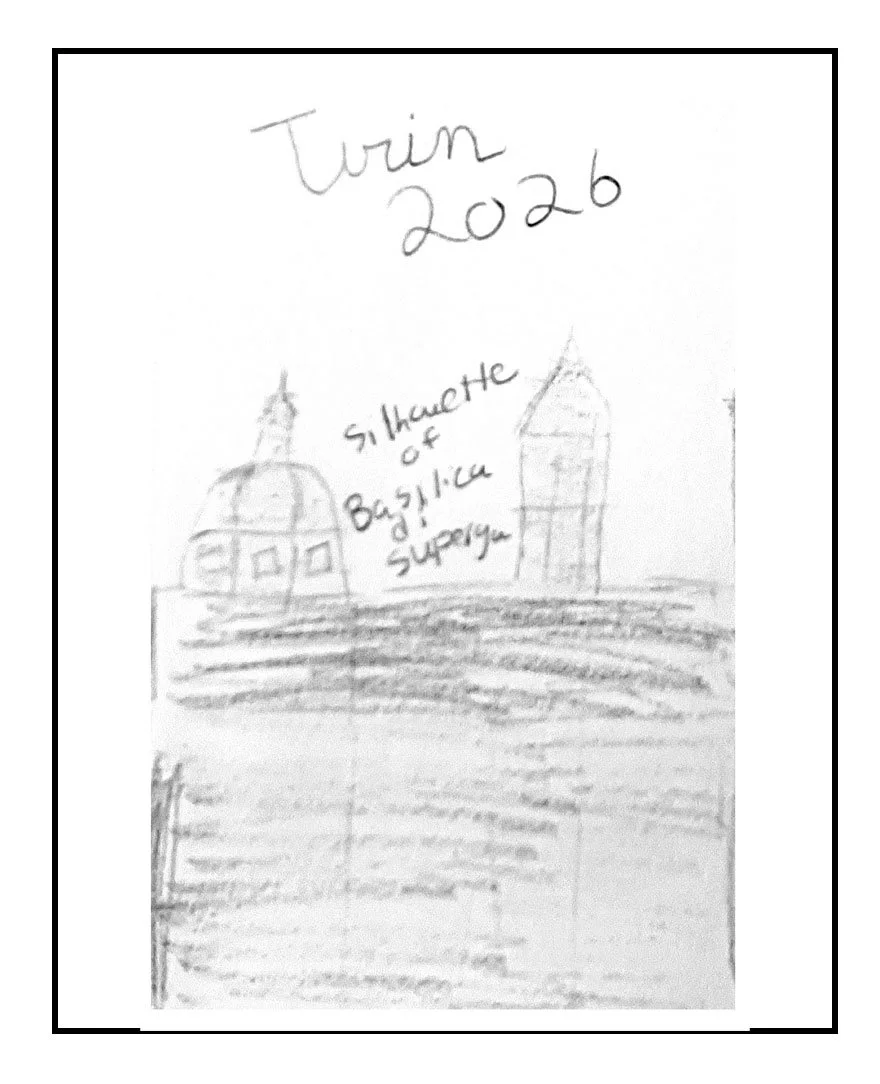
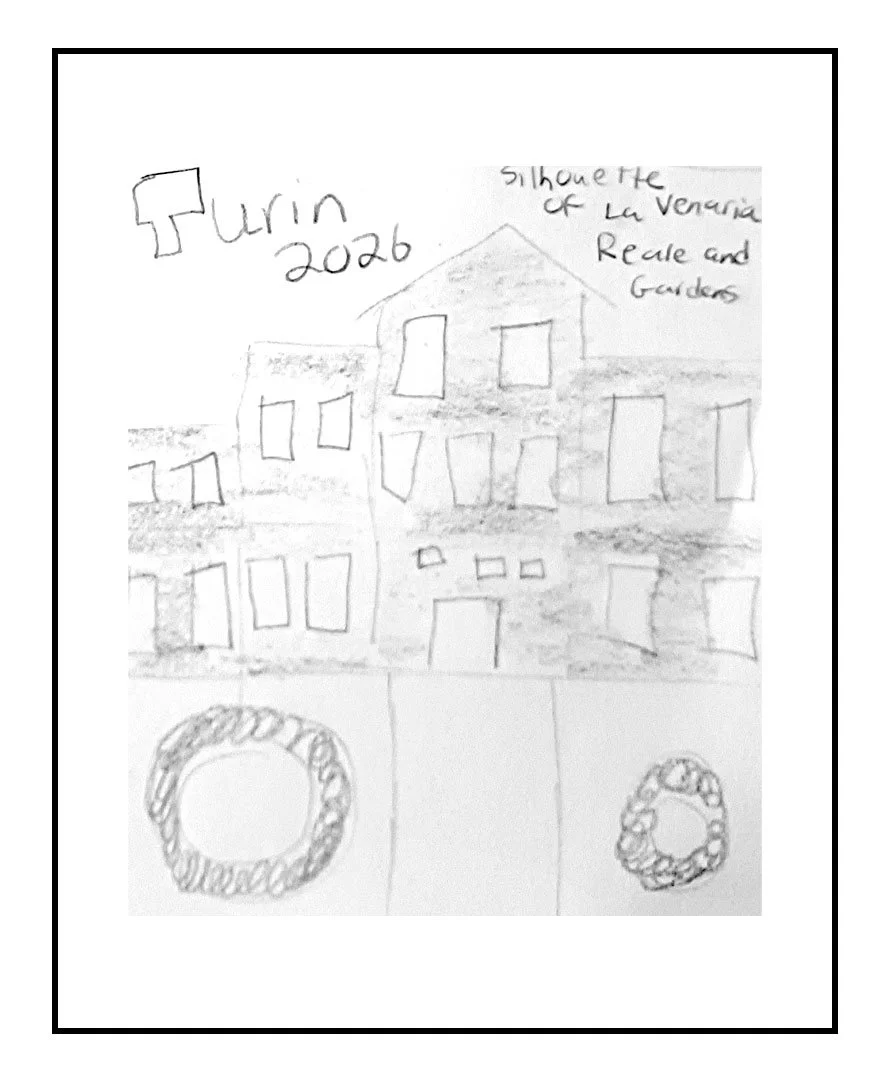
I researched Turin, the surrounding Alps, the city's cultural and architectural history, and the visual characteristics of the Winter Olympics. I was particularly interested in the relationship between Turin's Baroque architecture and its mountainous environment. I also researched Olympic pictograms and explored how sports could be simplified into recognizable graphic forms.
Audience
The primary audience included Olympic athletes, spectators, visitors, and the general public. The identity needed to communicate the location and event while allowing people to quickly recognize different sports and navigate the Olympic environment.
Concepts
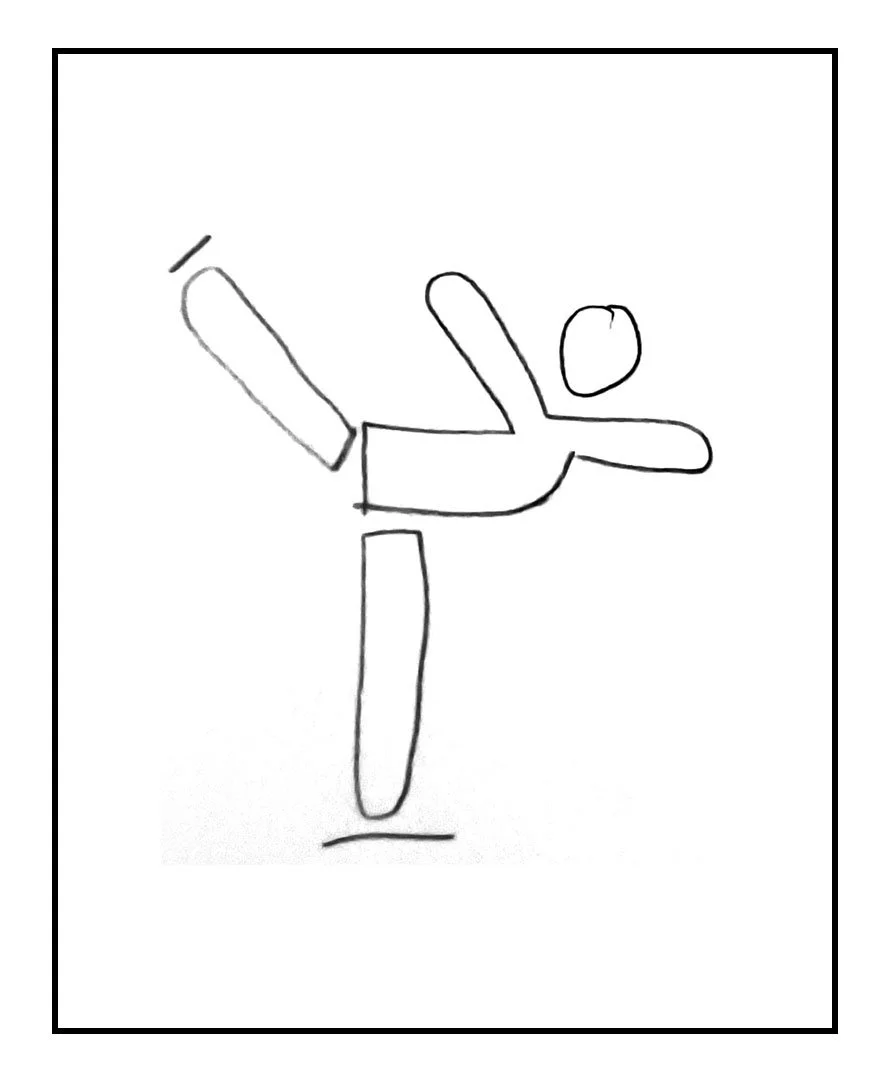
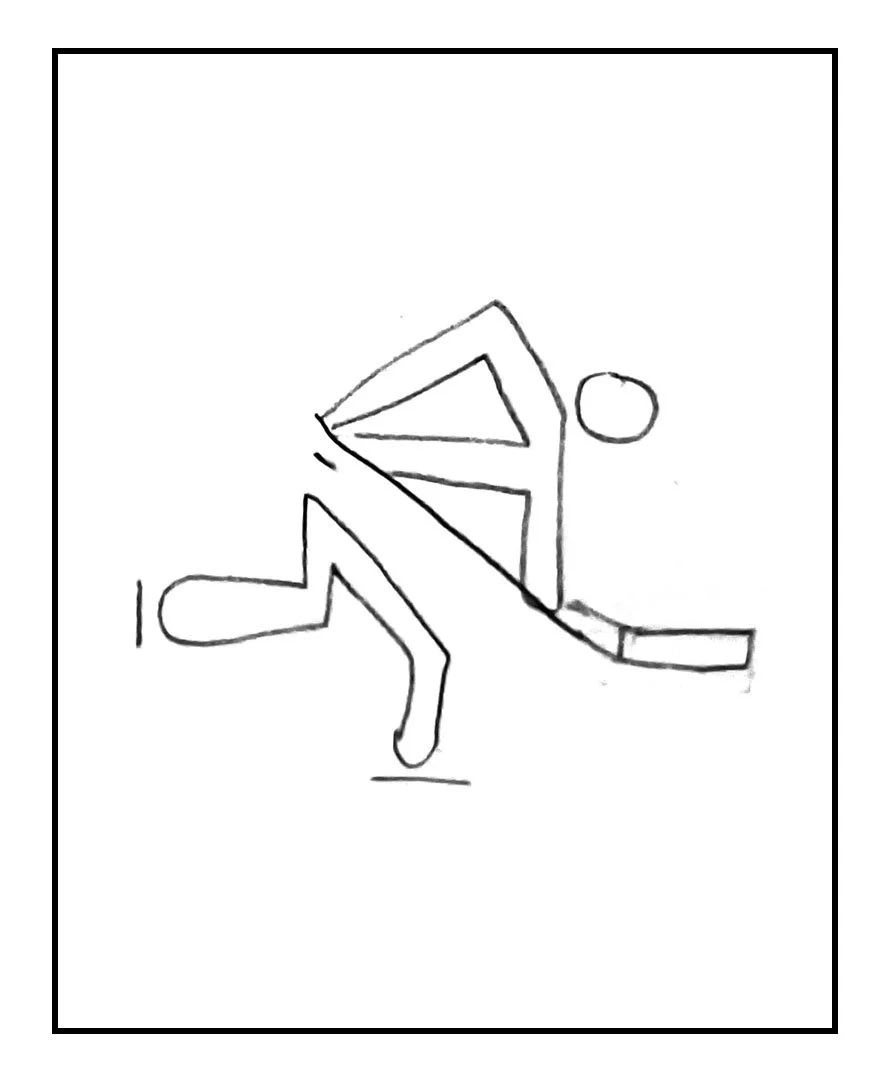
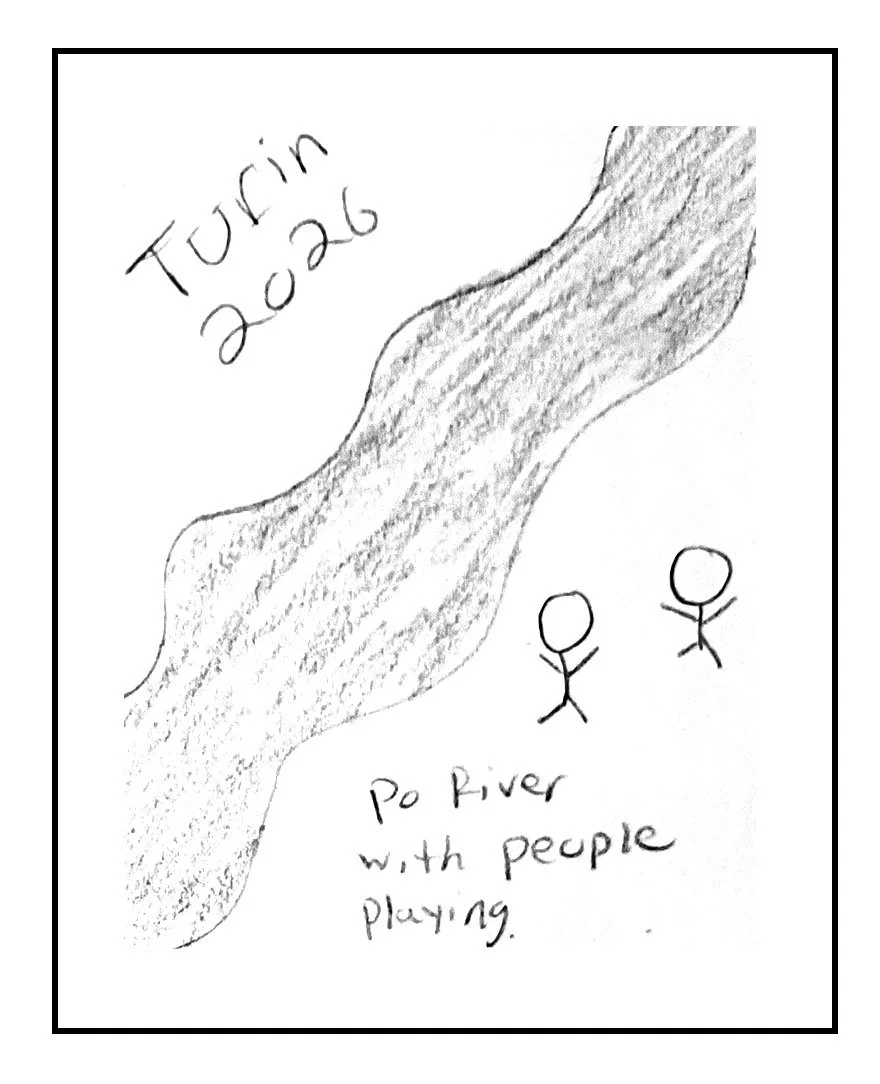
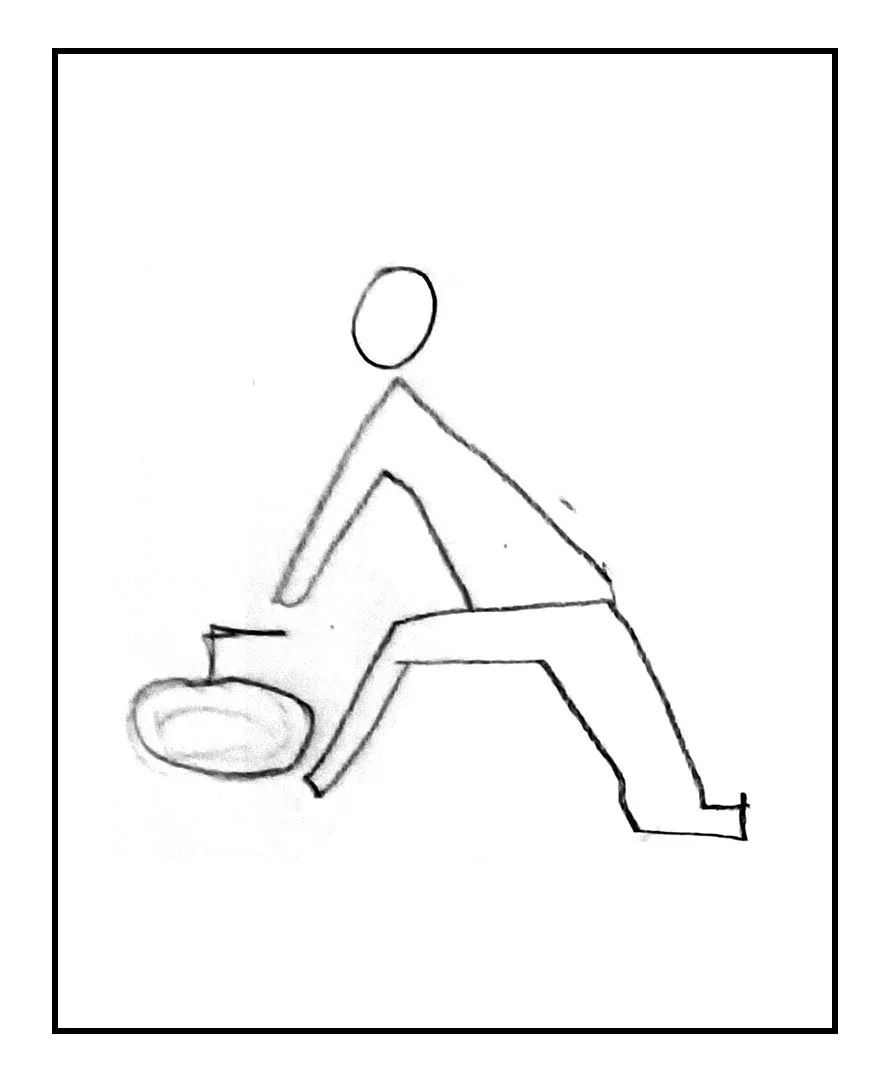
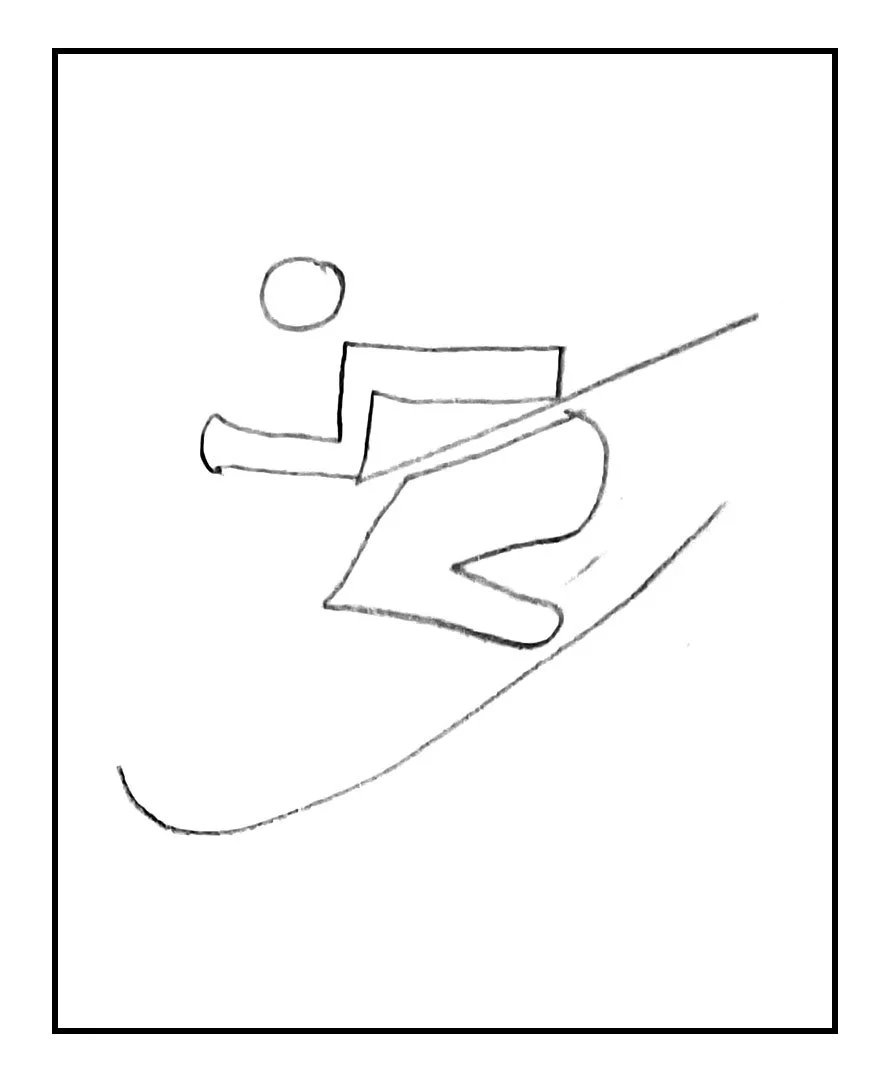
I explored mountain forms, Baroque-inspired shapes, Olympic symbolism, typography, and movement. I also developed different pictogram concepts for skiing, biathlon, curling, hockey, and other winter sports, looking for ways to connect the athletes and sports to the overall identity.
Interations
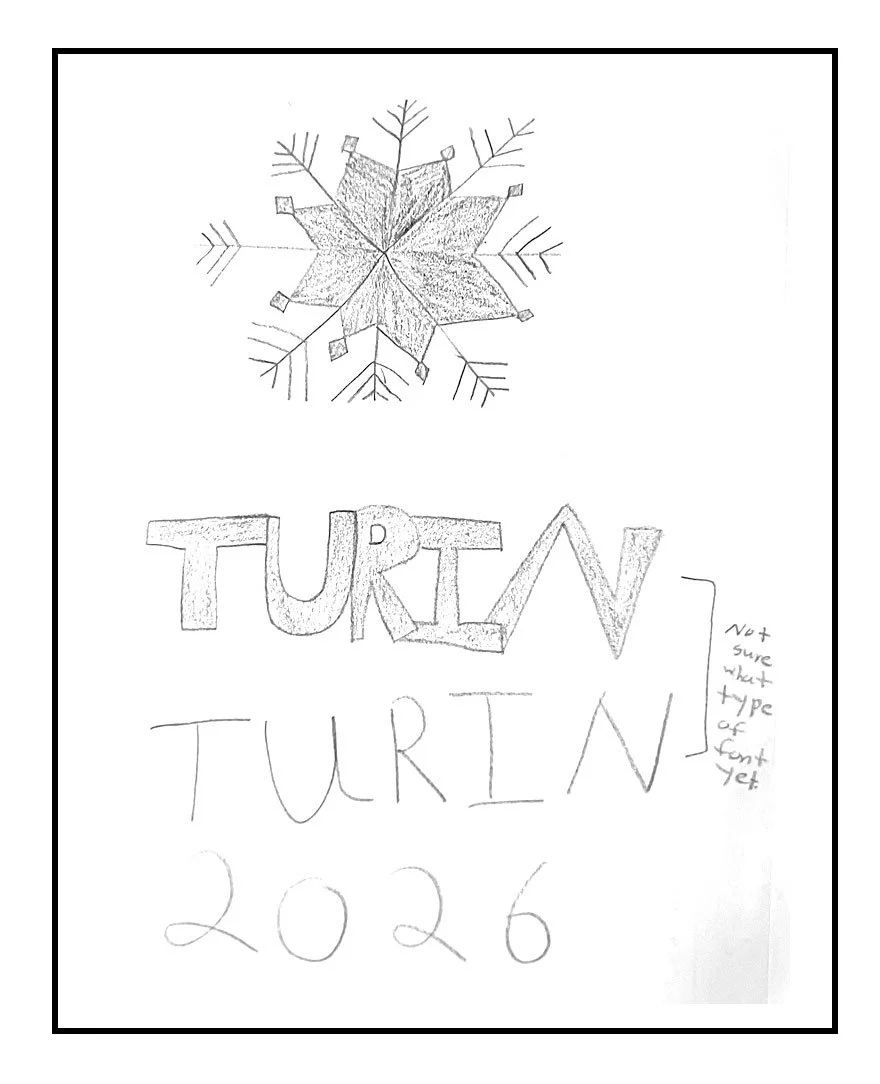
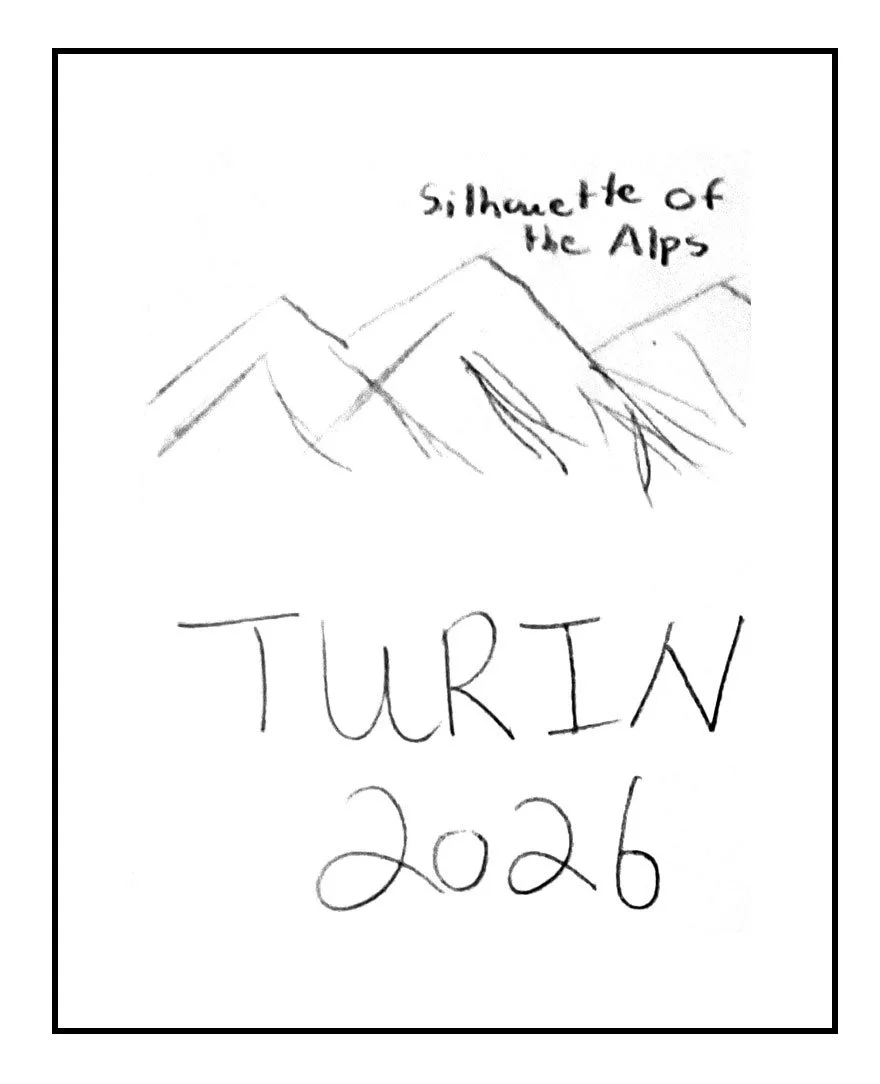
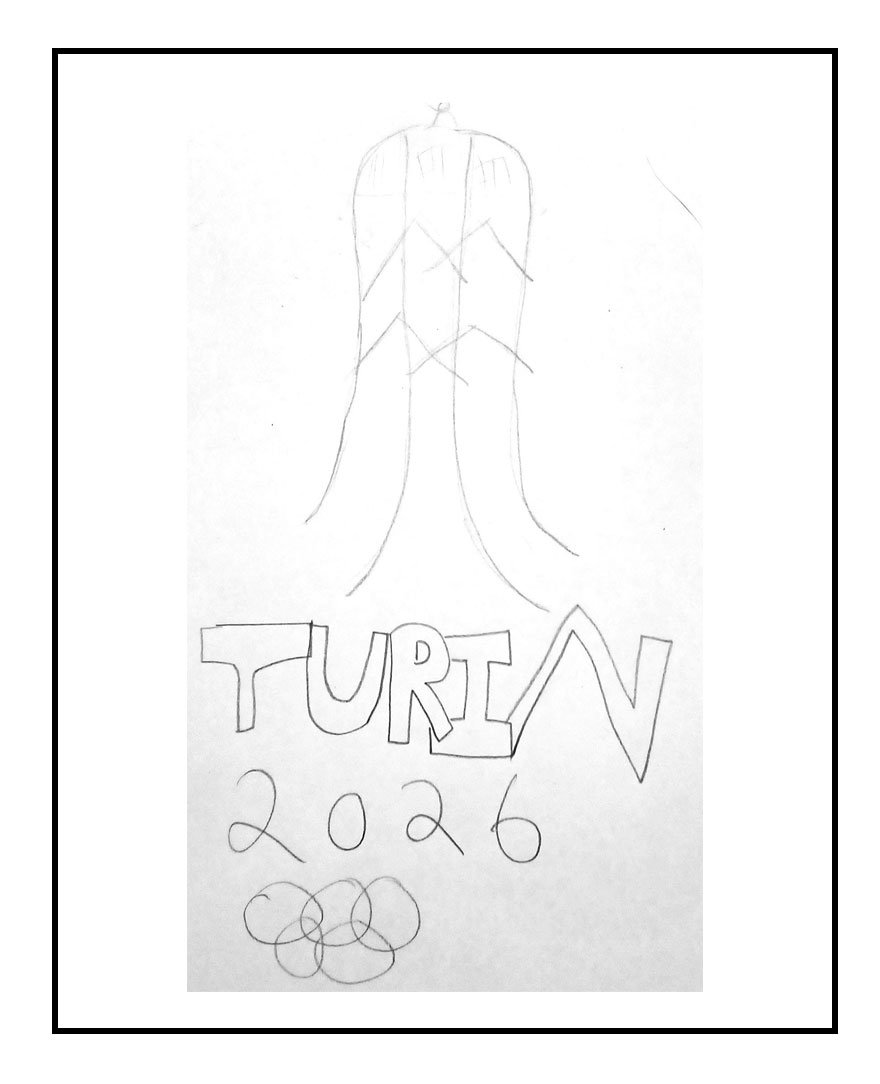
During the logo development, I identified several problems with the initial direction. The typography was difficult to read, the Olympic rings were too thin, and the Baroque-inspired elements were not working as effectively as intended. I revised the typography, strengthened the Olympic rings, simplified the mountain forms, and introduced the green swoosh to communicate movement. I also refined the pictograms so they worked more consistently as a system.
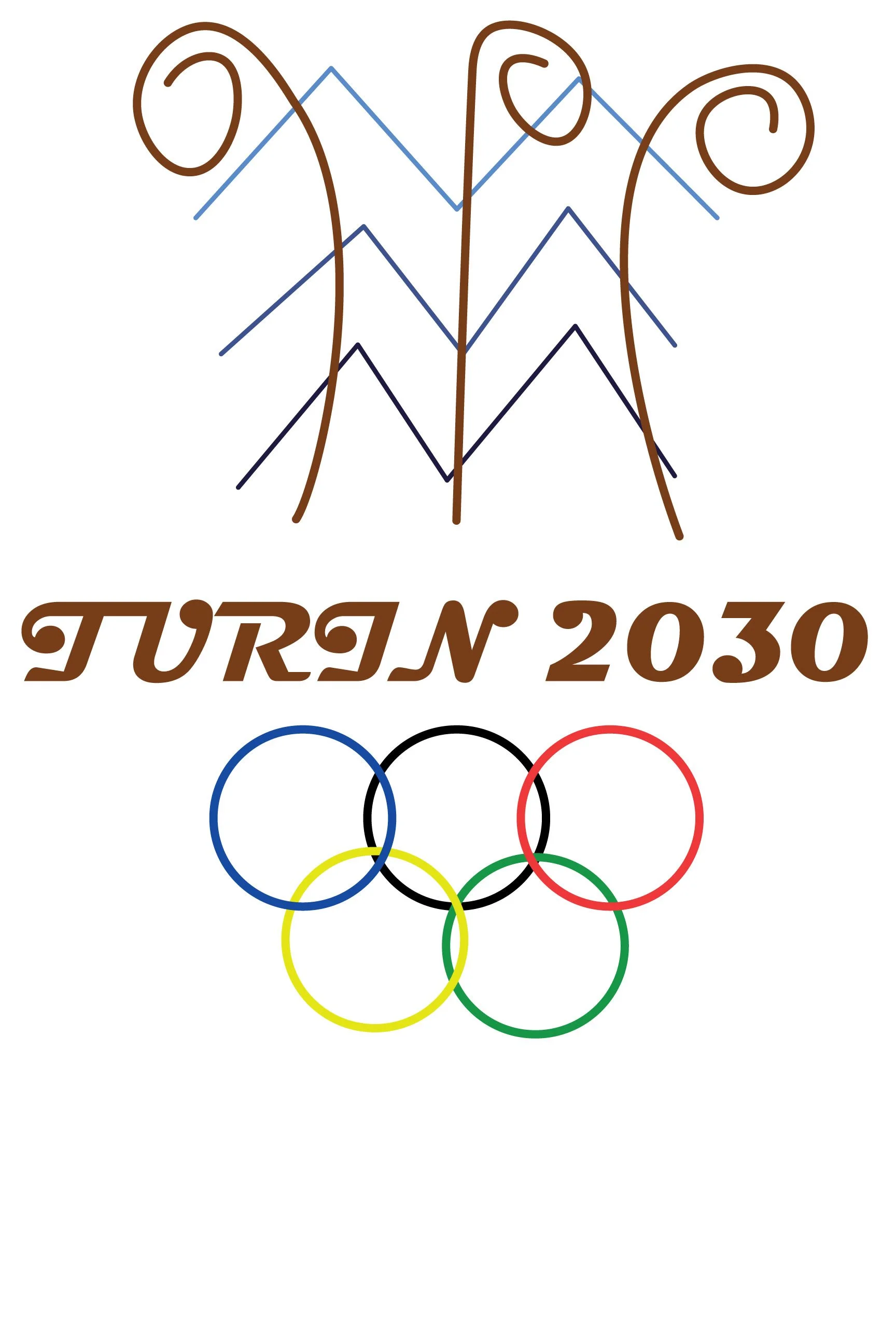
Digital Logo Draft
The logo originally was going to have the swirls of the Baroque style found on some of the buildings in Turin. Then the lines were to represent the Alps Mountains as well. The font ended up being a font that was hard to read, and the Olympic Rings look too thin in their stroke.
Decisions
I decided to make the Alps a major visual component of the identity and use the green swoosh to represent movement and energy. I simplified the mountain forms and strengthened the typography and Olympic rings to improve readability. I also created a consistent pictogram style so the individual sports would feel connected to the overall identity.
Color Palette
Bringing the color used brings nature to the logo. Green represents the ground or grass found in Turin. The shades of blue represent the Alps. The assorted colors represent the snow Turin gets during the winter season.

Hex: #1e5bab
RGB: 30, 91, 171
CMKY: 82, 47, 0, 33

Hex: #5e84c3
RGB: 94, 132, 195
CMKY: 52, 32, 0, 24

Hex: #109e4a
RGB: 16, 158, 74
CMKY: 90, 0, 53, 38

Hex: #5b2012
RGB: 91, 32, 18
CMKY: 0, 65, 80, 64
Typography
The typography of the logo was used for Turin 2030. This was to allow the text to stand out. It made it easier to read and find the logo. I was originally going to do Turin 2026 but since I decided to push the year out further to really make it a future Olympics.

Final Solution
The final solution is a complete Turin 2030 Winter Olympics visual identity system consisting of a logo, typography, color palette, sport pictograms, and environmental applications. The system combines references to Turin's location and cultural character with a consistent visual language for the Olympic event.

Final Logo Design
This logo is more representative of Turin, Italy. It has the Impact font which helps the words be more readable. While the Olympic Rings became thicker in their stroke. Plus, there is the green swish to help give some movement to the logo. The Alps are represented with two shades of blue mountains.
Final Pictograms Design
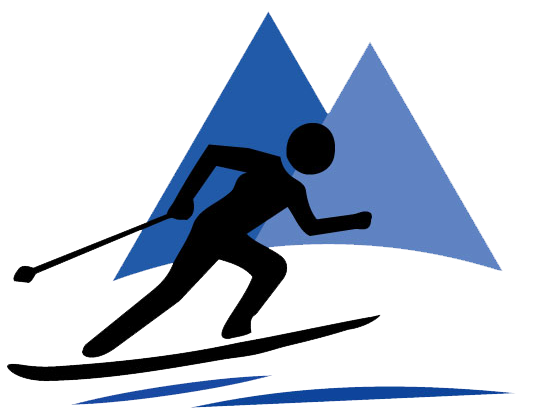
The pictograms are to help visitors find the different sport events at the Olympics. These pictograms are cleaner and more flowy. Also, the figures look more human-like, and you can tell what sport they are representing. Also, there is the tie in with the mountains being in the background of the pictograms. There is also movement in the pictograms.